
10 Steps to Prevent World War 3
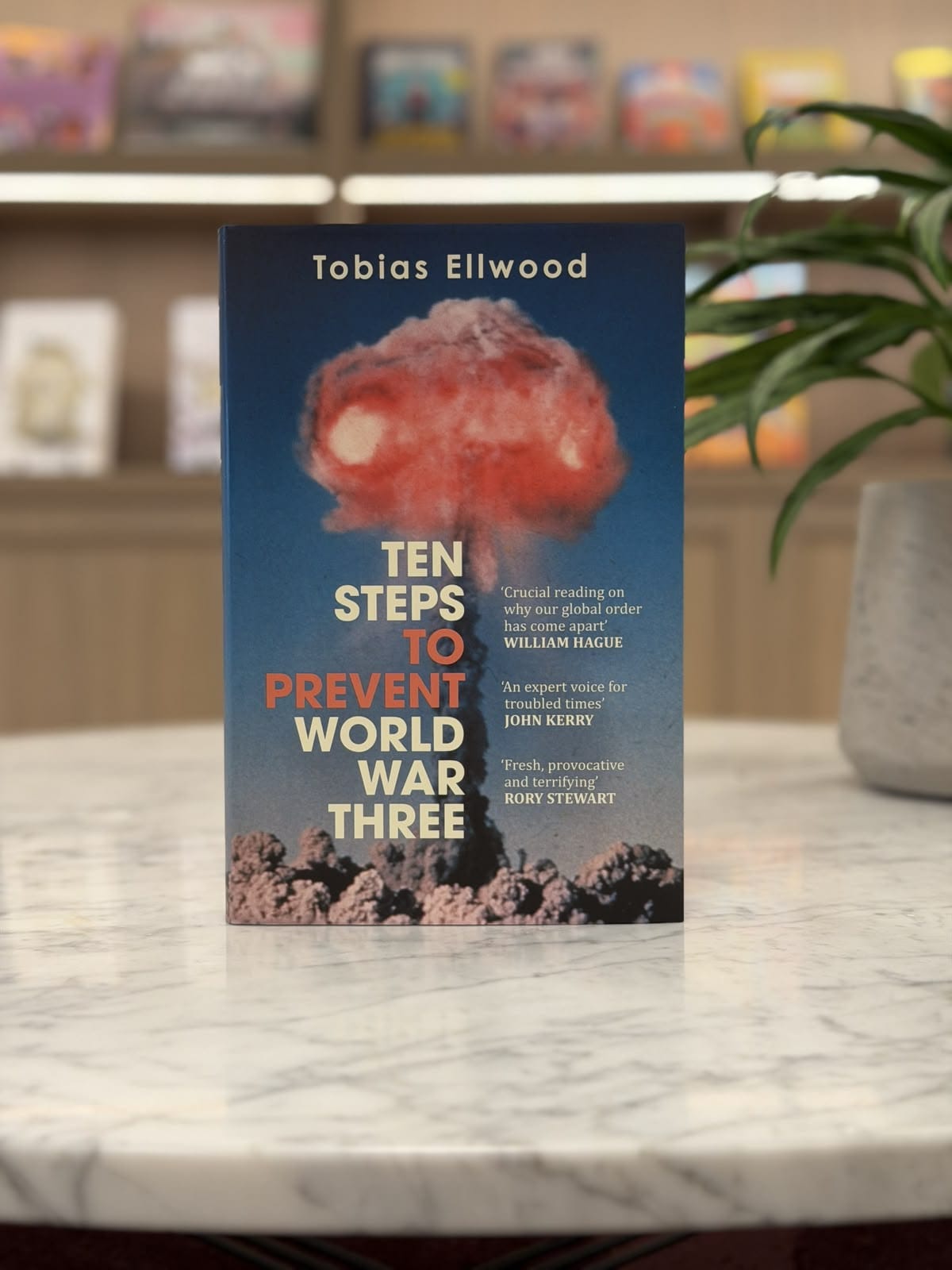
"We are in a cold war, but one unlike anything we've seen before. Influence, ignorance and ideology have been weaponised, with USA and China fighting on the global battleground to push their rival visions of the future.
The world is splintering into two competing spheres of influence and its no exaggeration to say that we are potentially looking down the barrel of a gun towards global armageddon. Western leaders can no longer be complacent or passive, allowing foreign actors chip away at our political infrastructure and national security."
The stakes could not be higher, but there is a path towards a brighter future. Ten Steps to Prevent World War Three draws on a blend of big ideas, personal narrative, lessons from history and geopolitical insights to uncover the mindset and strategies that can build a peaceful global future.
Tobias Ellwood talking about his new book '10 Steps to Prevent World War Three'
Tobias Ellwood is an expert in geopolitics and military strategy. As former Foreign Minister, Defence Minister, Chair of the House of Commons Defence Committee and an officer in the British Army's Royal Green Jackets, he is uniquely placed to offer solutions to the crises affecting our global order. In ten steps, he shows us exactly what is at stake, how we got here, and how we can build an exit plan to prevent regional conflict escalating into global war.
Media Reviews:
This book provides much-needed thinking on why the international rules-based system has come apart at the seams, while setting out ten bold proposals for stitching it back together again. Crucial reading for anyone who wants to see the West shake itself out of its golden age of complacency... crucial reading on why our global order has come apart at the seams. - William Hague
A thoughtful, thought-provoking and clear-eyed assessment of a rapidly changing world - and an urgent call to action - Peter Frankopan
An expert voice for troubled times - compelling, persuasive and prescient - John Kerry
A fresh, provocative, and terrifying portrait of the crumbling world order by a man with an intimate personal experience of defence, terrorism, politics, and foreign affairs, reflecting his striking physical and moral courage. - Rory Stewart
Tobias Ellwood draws on history and his own experience in government and the military to deliver a very compelling assessment of the threats defining our era. Engaging and insightful, this book maps the challenges ahead with precision and offers practical steps that world leaders and everyday citizens alike can take to navigate them with purpose. - General Jim Mattis (USMC - retired)
A welcome and timely call to arms to rebuild our resilience and ditch the continuity complacency that has left us so vulnerable and bewildered. Critically, Tobias reminds us that we are capable of achieving this, it is just a matter of political will. - Penny Mordaunt
This is a smart and considered book everyone should read. Tobias Ellwood takes the big, complicated forces shaping our troubled world and explains them with clarity and urgency. If you want to consider how close we are to a global conflict and what could prevent it... start here. - Kay Burley
Publisher information
Publisher: Bonnier Books Ltd
ISBN: 9781785129063
Number of pages: 448
Dimensions: 251 x 165 x 39 mm
Weight: 676 g
Language: English